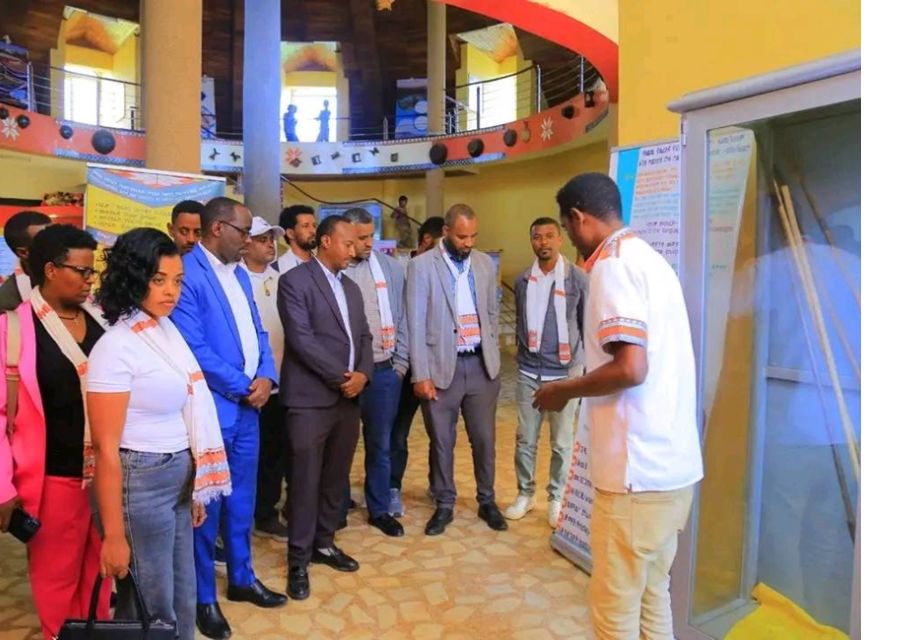
Central Ethiopia Rift Valley Geopar area: The Silti Cultural Museum is found Werabe Town, 170 kilometers from Addis Ababa the administrative capital of the Silti Zone in the Central Ethiopia Regional State (CERS). It represents one of the few ethnographic
Central Ethiopia Rift Valley Geopark area: The Silti Cultural Museum is found Werabe Town, 170 kilometers from Addis Ababa the administrative capital of the Silti Zone in the Central Ethiopia Regional State (CERS). It represents one of the few ethnographic museums established at the zonal level in Ethiopia. The museum was founded to preserve, interpret, and exhibit the tangible and intangible heritage of the Silte community, a Semitic-speaking community whose cultural identity, linguistic roots, and Islamic civilization trace deep historical origins to the early medieval period. The museum complex is composed of five traditional huts known locally as wulsa, arranged around a central hall that symbolizes the unity of the five major Silte clans. Inside these huts are traditional clothing, agricultural implements, household tools, manuscripts, and religious artifacts that reflect the Silte’s craftsmanship, social life, and Islamic scholarly traditions. The institution also contains a small library, a cultural hall, and a guest house, making it an educational, research, and community center at the same time.
Architecturally, the museum embodies the indigenous building styles of the Silte people. The round huts with grass-thatched roofs and bamboo walls reflect the cultural adaptation of the community to their environment and the symbolism of circular space as a sign of unity. The five huts correspond to the five major clans of the Silte, illustrating how architectural layout conveys social and genealogical meaning. The museum’s exhibition content focuses primarily on ethnographic and religious materials. Visitors encounter ceremonial dresses, Qur’anic manuscripts, prayer beads, agricultural implements, and musical instruments.
In conclusion, the Silti Cultural Museum serves as a powerful embodiment of the Silti people’s identity, memory, and resilience. Its creation reflects the community’s effort to institutionalize heritage preservation in a period of rapid modernization and social change. Although the museum currently struggles with infrastructural and managerial shortcomings, its symbolic and educational value remains immense.